|
College Planning:
Education Pays 2005 Update ... A Supplement to Education Pays 2004
The Benefits
of Higher Education for Individuals and Society (Click
here for the complete College Board 2005 report of the income differences caused
by college education and other factors.)
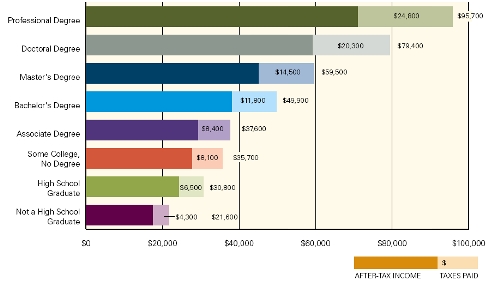
In 2003, the typical full-time year-round worker in the United States with a
four-year college degree earned $49,900, 62 percent more than the $30,800 earned
by the typical full-time year-round worker with only a high school diploma.
Those with master’s degrees earned almost twice as much, and those with
professional degrees earned over three times as much per year as high school
graduates.
The Knowledge Economy
We live in the digital age, the Knowledge Economy. That means that one
must have the appropriate background and education just to enter the playing
field.
Paying for College
Saving for education is a long-term investment. The more you save, the less
you'll need to borrow or seek from other sources.
While the cost of college may be daunting for many families,
the cost of skipping college will likely be much greater. Obtaining a
college education is becoming more expensive and more competitive.
However, the costs of NOT going to college are becoming must greater, as you can
see from the chart above.
To encourage families to save more for higher education
expenses, federal and state lawmakers have developed innovative college savings
programs, such as 529 plans and the Coverdell Education Savings Account
(formerly known as the Education IRA).
According to FinAid, parents should expect to pay at least half to two-thirds
of their children's college costs through a combination of savings, current
income, and loans. Gift aid from the government, the colleges and universities,
and private scholarships accounts for only about a third of total college costs.
Accordingly, it is very important that parents start saving for their
children's education as soon as possible, even as early as the day the child is
born. Time is one of your most valuable assets. The sooner you start
saving for college, the more time your money will have to grow.
Our Help & Professional Resources
There are many programs to help you save for college. 529
programs can be very helpful to tax deferred saving for college. Schedule
a meeting today with us to discuss various alternatives for meeting this
hefty financial challenge.
Online Resources
How to Pay for College:
A Guide for Parents by the College Board
CNN
Money: Saving for College 101
FinAid Guide to Saving for College
Saving for College: The Complete Guide for All States' 529 Plans

| 